
The Mazda Fan Festa wasn’t about the cars
The Mazda Fan Festa wasn’t about the cars
What we saw at the Mazda Fan Festa 2026 at Fuji Speedway

Every time we visit Fuji Speedway, it’s always a special occasion.
Yes, it would be nice to drop by and watch a major international race at this iconic venue, but the days of F1 at Fuji are long gone, and the one that remains is really the World Endurance Championship. Interesting as it could be, 6 or so hours is a long time to be there for one race as a spectator.
I can’t say that I feel the same about spending a day there for the annual Mazda Fan Festa.
The first Mazda Fan Festa was in 2016. At the time, Mazda had just broken free from the last vestiges of ownership that Ford had over them. Many fiercely loyal Mazda fans felt that it was shameful for Mazda to have been controlled by an American auto giant, building globalized models that felt more Focus than 323. When Mazda was liberated from foreign control and influence, they began the Fan Festa; a celebration of what makes this automaker from Hiroshima special.
As I arrived in the morning and walked around the paddock area behind the pit building at Fuji Speedway, so named after Japan’s iconic stratovolcano hiding behind the clouds to the northwest, it felt rather spacious and fairly empty. Traffic was actually quite light getting in here, so much so that you have to wonder if there was an event at all coming into the speedway.
4 photos
Mazda was never the biggest automaker in Japan. Far from it. This morning’s crowd is a far cry from the turnout that you would get at a similar event like the NISMO Festival, which is set to return later this year. It has to be said that Nissan does sell way more cars than Mazda and has a much wider global footprint, but also that the Fan Festa is held over a weekend, while NISMO Festival is compressed into just one day. This is an unhurried kaiseki meal where you take your time and savor the flavor, the textures, and appreciate the technique, rather than a shabu all-you-can-eat with a fast and furious 90-minute hard limit.
3 photos
We walk past many of Japan’s famous tuning houses and aftermarket parts suppliers. For fans of JDM, this is a virtual smorgasbord of Mazda parts and accessories. Spoilers, body kits, exhausts, shift knobs, steering wheels, strut bars, and so on and so forth.
2 photos
For owners of more modern Mazdas in the Kodo era, there was plenty to enjoy and buy. Mazda Spirit Racing was there; that serves as Mazda’s official in-house performance and motorsports brand. For more casual owners who drive models like the CX-30, CX-5, and others, tuning and accessory house AutoExe was there. Founded by Mazda factory driver Yojiro Terada along with some Mazda engineers. Same deal: struts, accessories, kits, and lots of bits and bobs of steel and carbon fiber. They actually offer these in the Philippines via Mazda, giving an extra dimension of personalization that is quite cool to see.
3 photos
If you’re not careful and you own an MX-5 or something as far less common in the Philippines such as the RX-7, don’t be surprised if you end up maxing out your credit card on parts and accessories, tempted in no small part by the favorable exchange rate. All you really have to think about is the shipping.
4 photos
What makes Mazda truly unique in the automotive landscape is that they take driving pleasure seriously, and definitely way more so than any other Japanese brand. Yes, Toyota, Mitsubishi, Subaru, Nissan, and Honda all have or have had vehicles that are about putting a smile on your face when you turn it on, but Mazda does it on almost every vehicle they produce. The only other OEM I can think of that does it (outside of the exotic and sports car manufacturers like Porsche) would be BMW.
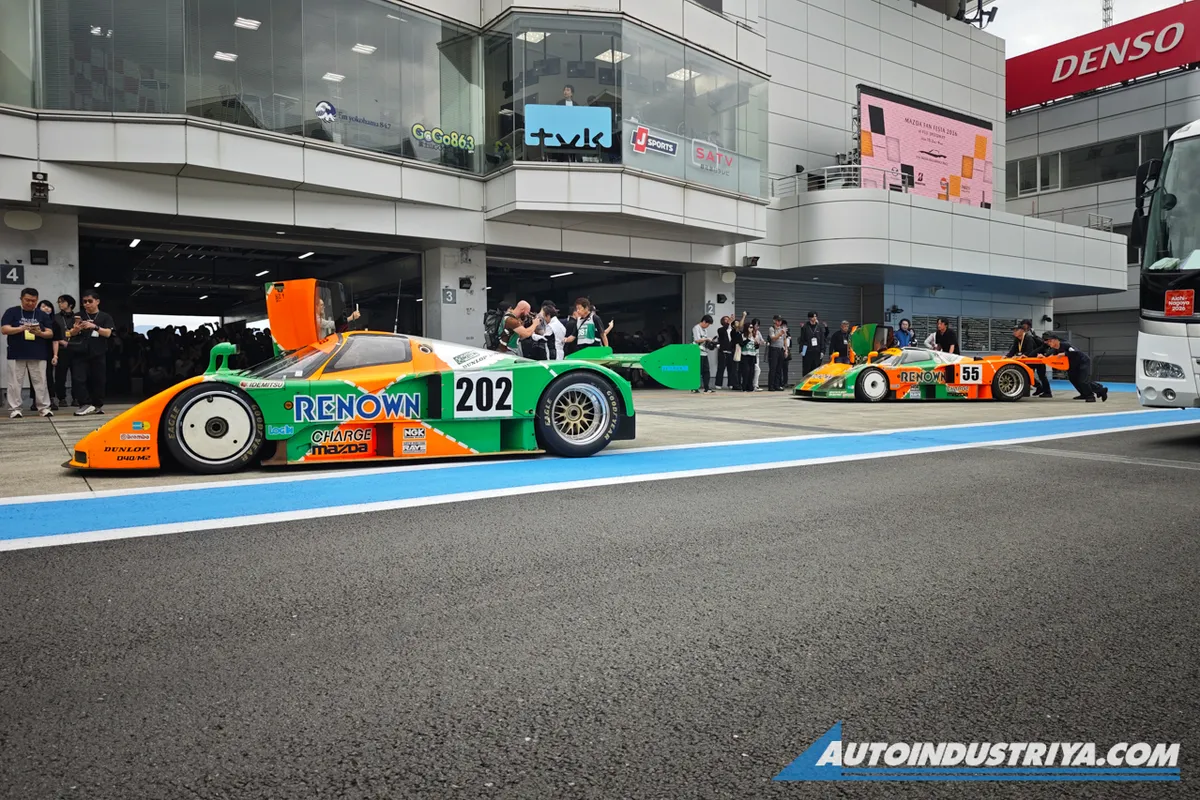
It is at the core of everything that Mazda does, and the ultimate expression of that is in the pit building: Mazda brought out their historic race car collection, particularly the ones running on Wankel rotary power that is at the core of Mazda’s racing endeavors and success.
3 photos
Here you’ll find various liveries of vintage Mazda RX-7s. We also found the #19 Mazda Cosmo 110 S that finished 4th in the 84-hour Nurburgring endurance race in 1968. There were several flavors of the 767B, including the silver #77 that finished fifth in the 24-hours of Daytona and ninth in Le Mans 1989. But the real jewels in Mazda’s crown have to be the trio of 787B race cars, and of this trio the ultimate is the #55.
2 photos
The 1991 24 Hours of Le Mans is one that is cemented in Mazda’s memory. It was the event where the #55 Mazdaspeed 787B driven by F1 drivers Johnny Herbert, Volker Weidler, and Bertrand Gachot achieved the greatest feat by a Japanese automaker in motorsport: they won Le Mans. Before this, no other Japanese automaker had won Le Mans, even though much larger automakers such as Nissan and Toyota were also racing at the time. Mazda was able to prove itself as an equal to giants of the sport that won Le Mans at the time, such as Ferrari, Porsche, Alfa Romeo, Bentley, Bugatti, Aston Martin, Mercedes-Benz, Ford, Alpine, and Jaguar; the defending winners at the time, Mazda won.
3 photos
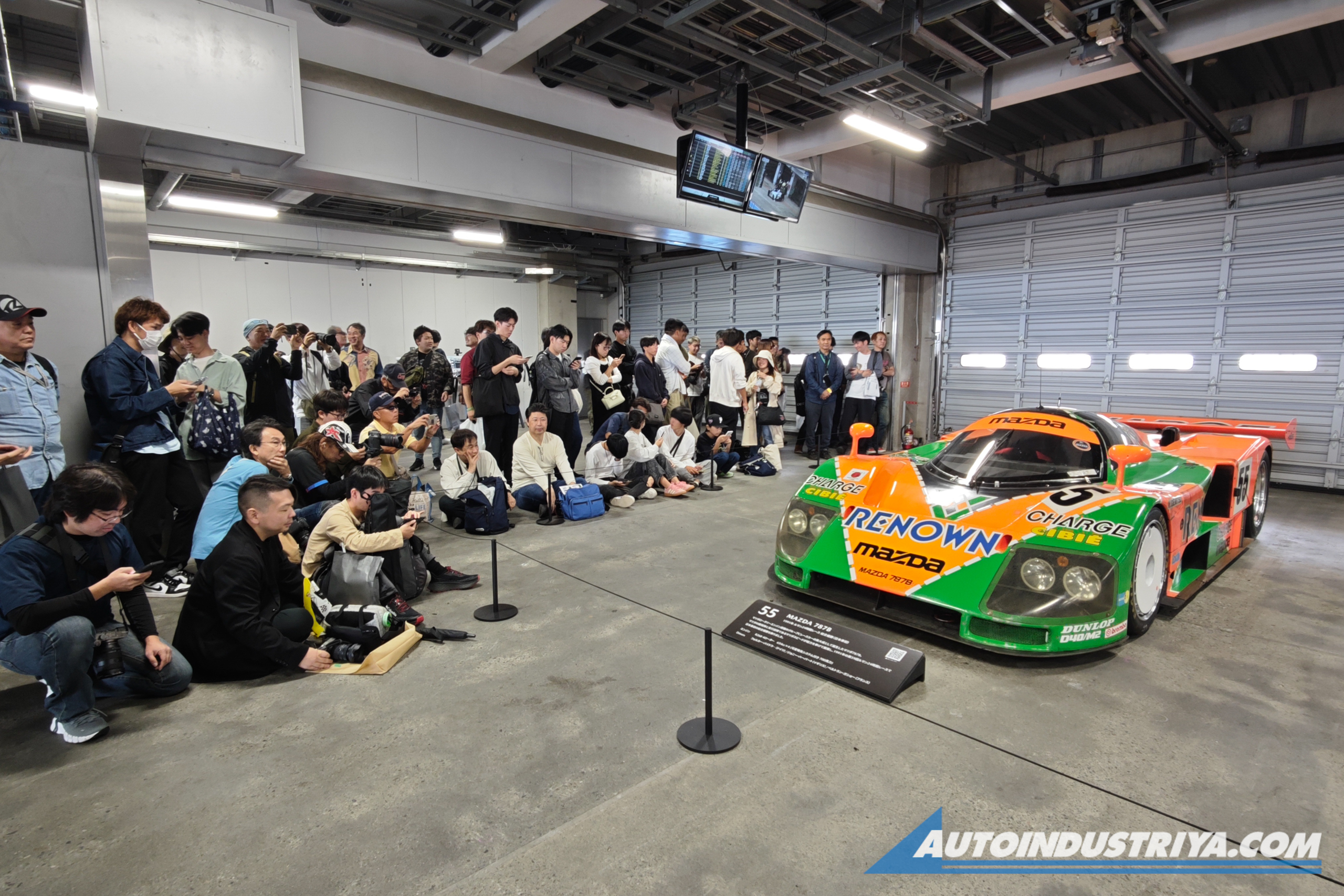
It's no surprise that there was a gathering of fans around the #55 787B, 35 years after it won Le Mans. They were waiting for the vehicle to be powered up and warmed up before it was run. Just then, two Mazda technicians walk up to the car and start to prep the engine. Fuel is added, and perhaps some fresh oil. The smell is strong, but that’s about to be overshadowed by the sound.
BRRAAP! BRRAAP!
The #55 787B comes alive in glorious fashion. The technician gives it revs to let the oil run through and warm up the car, but the sound is just incredible. I look at his ears and see no earplugs or protection of any kind as he flicks the throttle body open, closed, open, closed. The elderly technician must be deaf by this point. But perhaps I was more worried about the young couple sitting about a meter away from the right side of the vehicle, right in the line of fire from the exhaust pipe. They’re getting the full fumes at max volume as the 787B spat out some smoke and soot. Just then, a Mazda staff member ran over and handed them a black sports jacket to try and protect themselves, but they just sat there smiling and savoring the experience.
3 photos
Soon after, we made our way to the main straight for a grid walk. All of Mazda’s cars start peeling out of the pit area and onto the track, and park up on the main straight with the trio of 787B race cars front and center. I wouldn’t stay too long here, though, as I prefer a different spot at Fuji Speedway when the cars go for their runs. Yes, the main straight is nice if you want to hear the high-pitched, high-revving 787B at full throttle, but I prefer the hairpin at Fuji.
2 photos
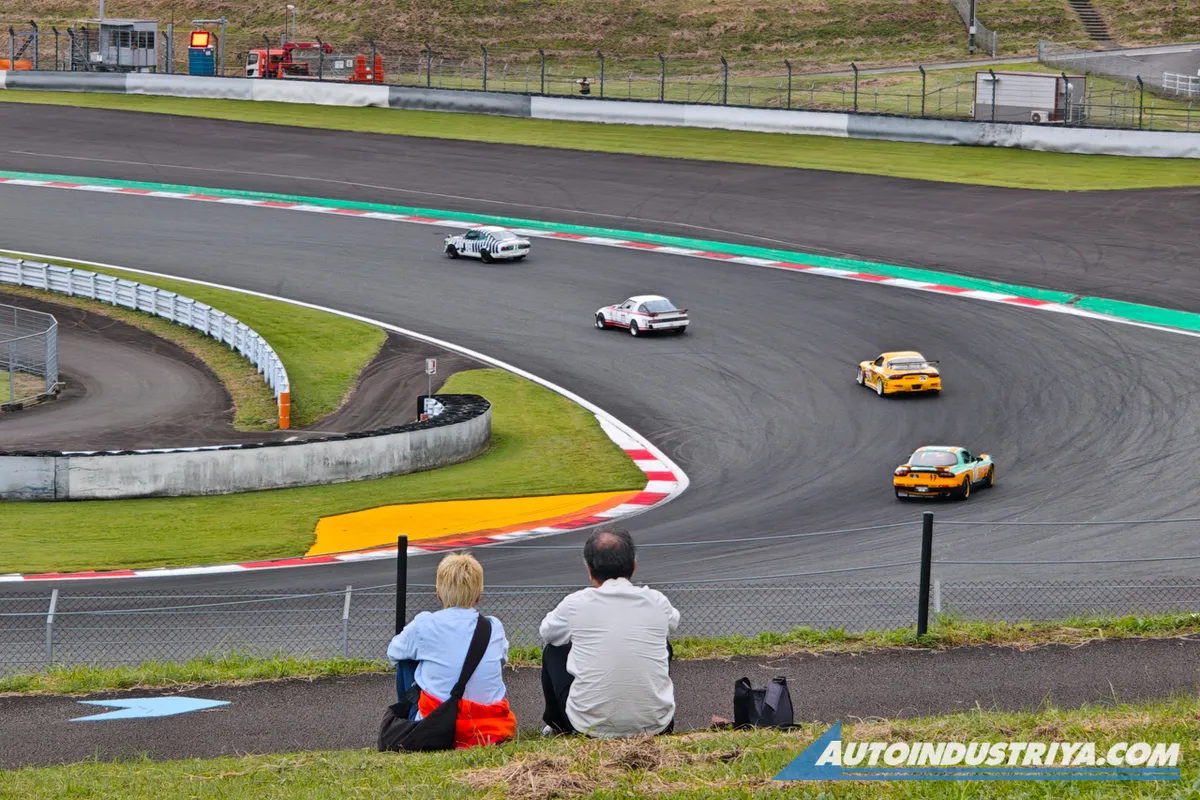
I sit down on the grassy amphitheater around the hairpin corner, and just watch as one car after another go for it. The rotary engines really do sound far different from any other car with pistons, and that goes triple for the #55, with the brake rev matching (heel-and-toe) preparing it for the corner. No other car sounds like this, and probably none ever will. It really was a shame that Le Mans sports car rules changed after 1991 to mandate that pistons are needed, effectively outlawing rotary.
Something really stood out to me this time at the Mazda Fan Festa, and here it is: the Mazda Fan Festa was never about the cars.
My argument is right there in the name: Mazda FAN Festa.
3 photos
While the car is what was on show for us to see, Fan Festa is about the fans. That’s why Mazda didn’t put up any barriers between the fans and their cars. An ordinary fan can walk up to the cars and take pictures. An ordinary fan can talk to the drivers there. An ordinary fan can sit there with his girlfriend and get blasted in the face by the exhaust of the 787B. Whatever the case, that’s what makes it special: Mazda is actively building a connection with us.
In a time when cars are starting to be pushed to be more like appliances, Mazda reminds us that it means more than that to a lot of people. Here is a place where driving technique is still talked about and honed with pride, and where engine sounds are legit and not synthesized. There are no EVs around being charged, but there are cars being fueled with jerry cans. I look around and see people with a bit more gray on their heads, catching up with old friends. More importantly, I see families where the parents take pictures with their kids with the cars in the background.
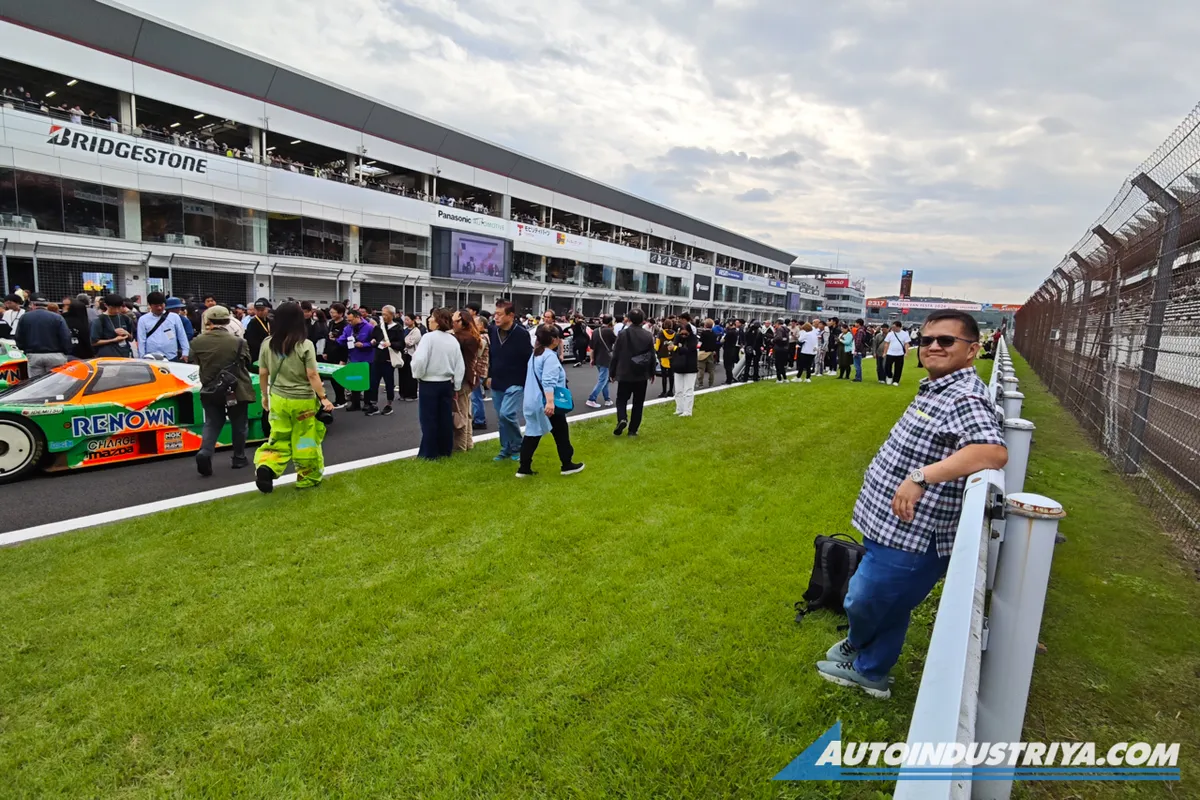
That’s why I didn’t push to take pictures of the cars while no one was around them. It was the people that make the cars special, not the other way around.
We who cherish automobiles are the minority now. In the age when we are all bombarded by AI this EV that, comparing charging speeds and researching autonomous driving, it's so awesome that Mazda is out here celebrating driving with their fans.
Related Posts
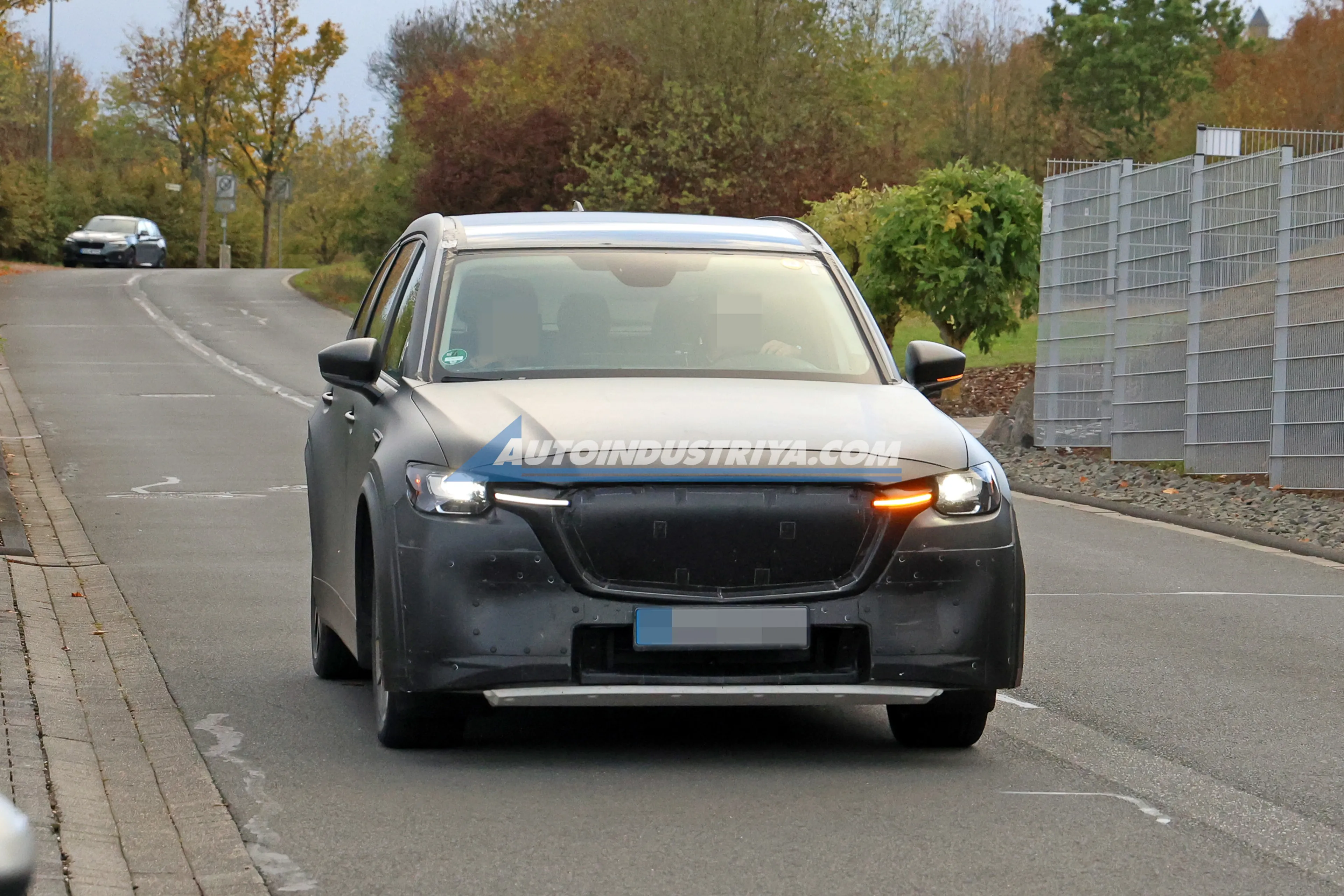
Mazda spotted testing dedicated electric SUV platform at the Nürburgring
Automotive spies have captured Mazda’s early electric test mule undergoing chassis evaluations around the Nürburgring, using a modified CX-90 body to develop a dedicated EV architecture now expected by 2029.
 AutoIndustriya.com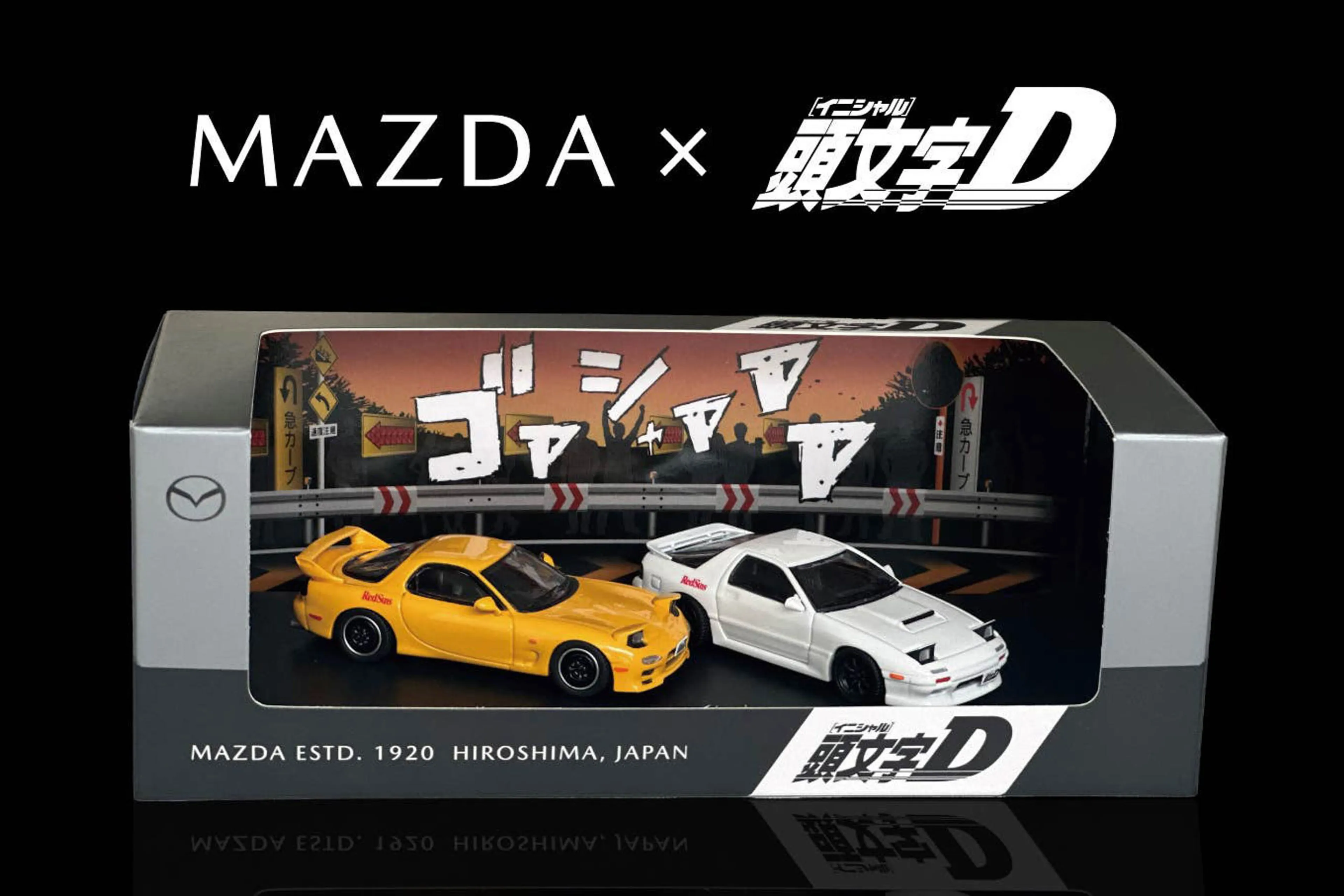
Akagi RedSuns: Mazda releases official Initial D RX-7 die cast
Mazda and Initial D are finally making their long-standing RX-7 connection official with a 1:64-scale die-cast set featuring the iconic FC3S and FD3S, marking Mazda’s first official merchandise project with Initial D
 Francis Pallarco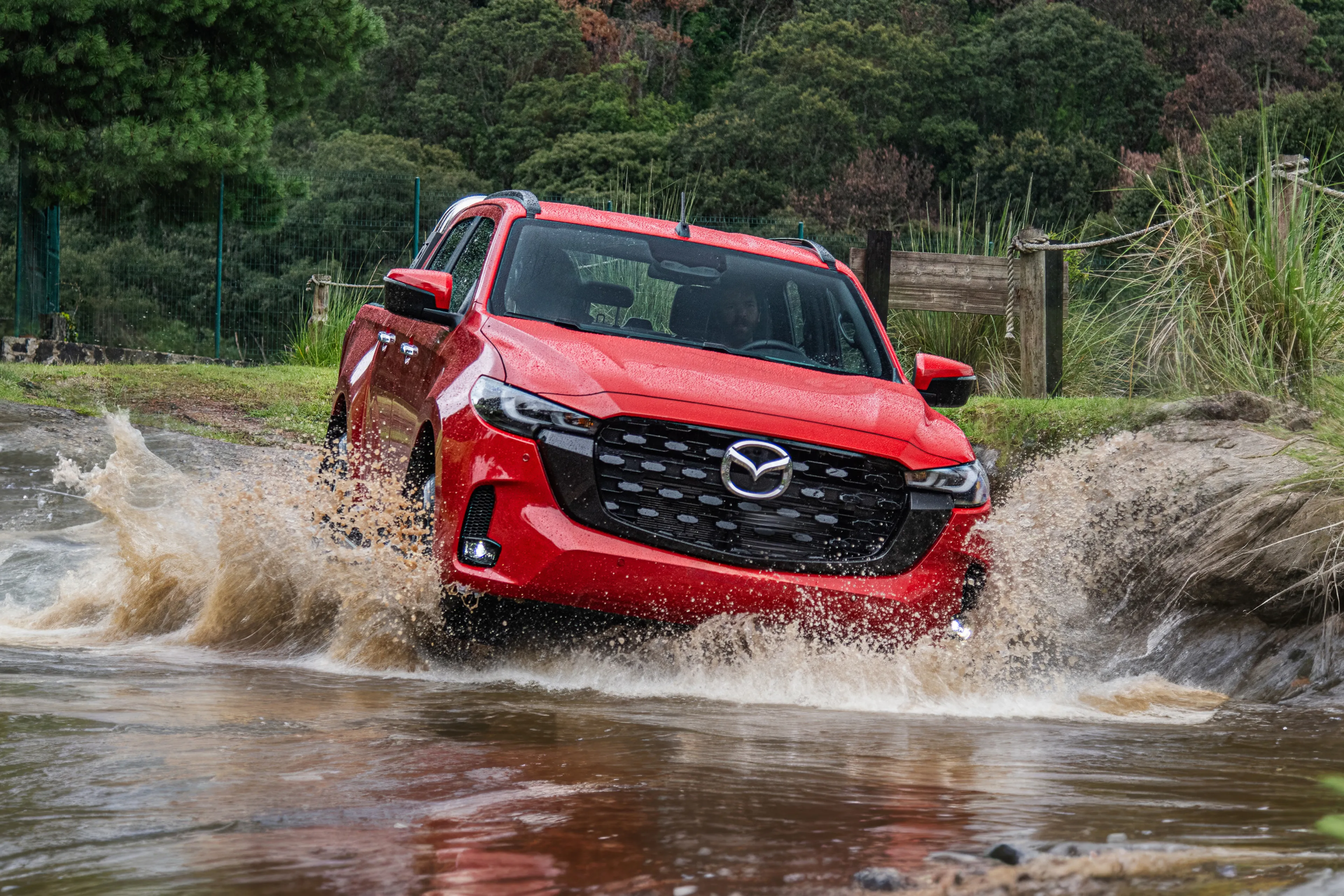
Report: Mazda executive confirms next-gen BT-50; will it go electrified?
Will the next-generation Mazda BT-50 continue with diesel power or branch out to electrified powertrains?
 Marcus De Guzman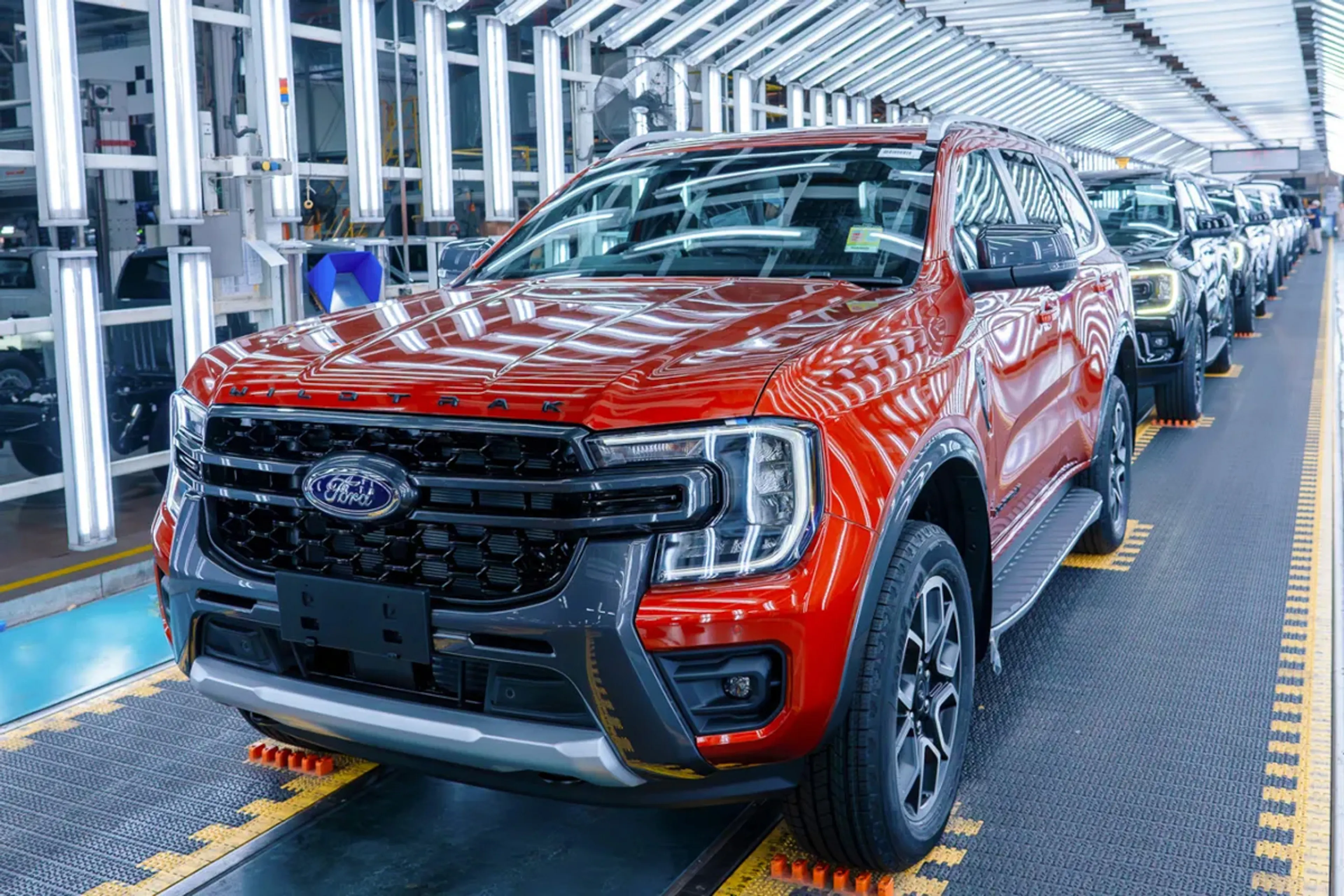
Thailand flooding: Ford, Honda, Mazda also temporarily halt production
More brands join Toyota in suspending production operations due to recent flooding in Thailand
 Jamil Lacuna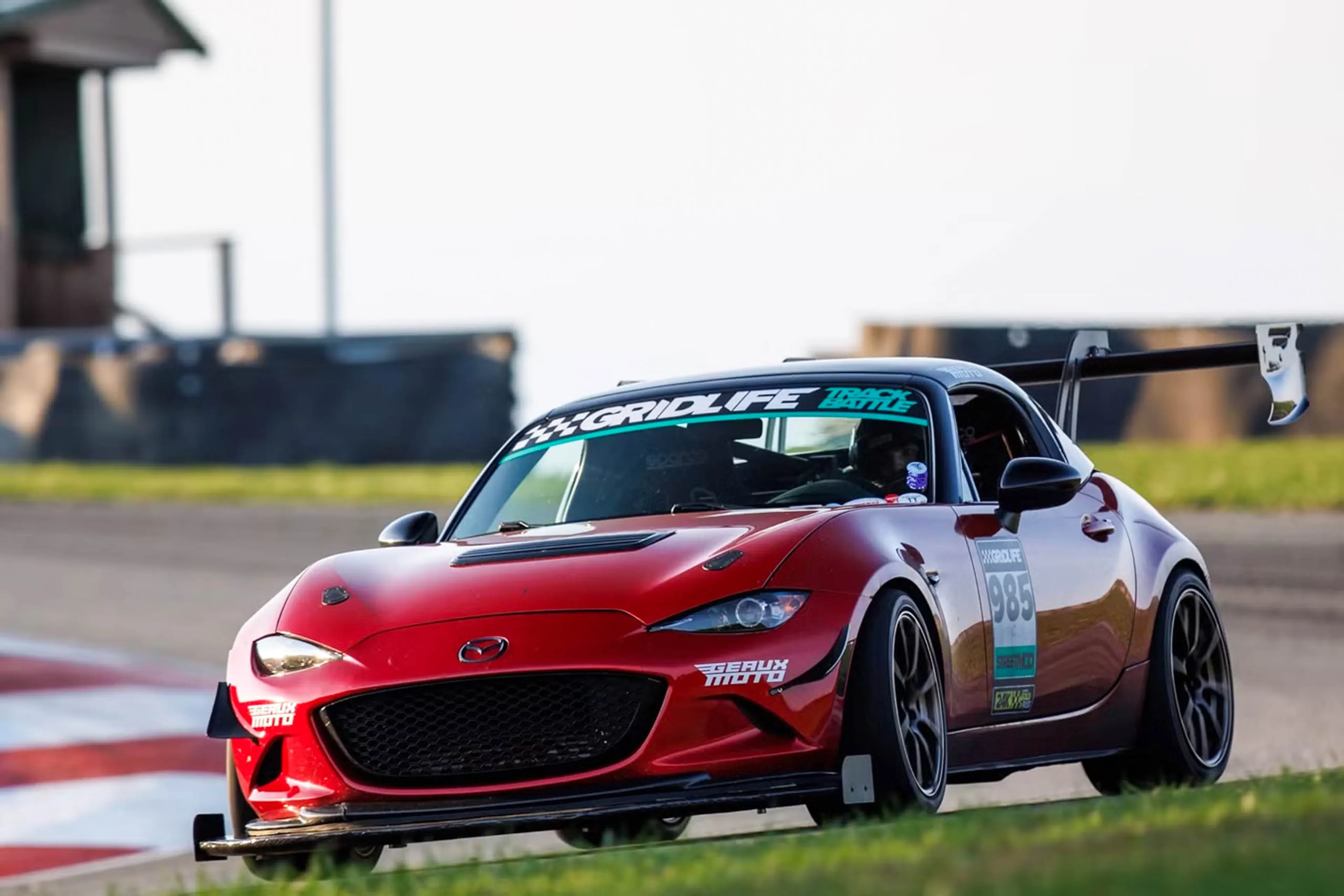
This Ford EcoBoost engine-swapped Miata makes 460 HP
Louisiana-based tuning company Geaux Moto, however, has taken the ND Miata in a very different direction with its “Ecoyata” Ford-powered roadster that makes 450 PS at the wheels.
Francis Pallarco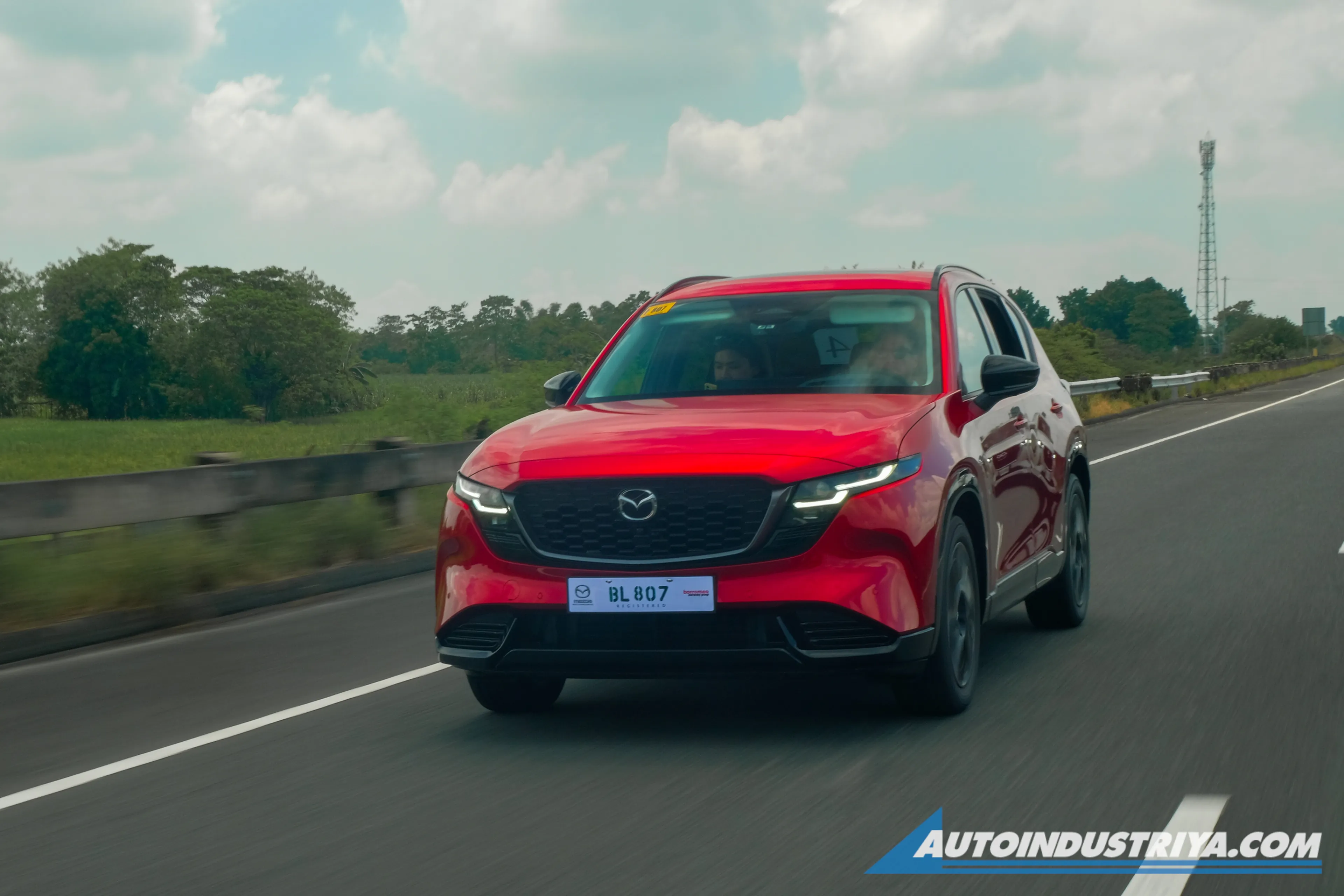
2026 Mazda CX-5 AWD HEV: Is this Japan-made CUV hybrid enough?
Third-generation Mazda CX-5 HEV debuts in PH, but is it a hybrid through and through?
Marcus De Guzman