
Driving in China: How to get a Chinese Driving Permit
Driving in China: How to get a Chinese Driving Permit
Yes, foreigners CAN drive in China.

Like many automotive enthusiasts, getting a driver’s license is a symbol of the freedom and mobility on two, three, four, or more wheels.
That is especially true if you’re a tourist abroad. Yes, it’s nice to experience and maximize the (generally) far more efficient rail and bus systems in more developed foreign countries, but sometimes it just makes more sense to rent a car and drive. That’s why an International Driving Permit (IDP) is very handy.
Contrary to popular belief, an IDP is not a driver’s license. Instead, it is a translation of your license into several languages that are recognized by signatories to certain international agreements on road traffic. There are the 1926 Paris Convention relative to Motor Traffic, the 1949 Geneva Convention on Road Traffic, and the latest being the 1963 Vienna Convention on Road Traffic. It will vary, but if the country you’re visiting signed any or some or just 1 of these conventions, there is a good chance that they will honor an IDP issued by the national auto club (in our case, the AAP), but verify first.
There is, however, one very large and very important country that won’t honor any kind of International Driving Permit: the People’s Republic of China, or PRC. The simplest explanation is that the PRC only became a recognized member of the UN in 1971 after a lot of stalled deliberations and delays at the United Nations. Their UN membership came well after the conventions.
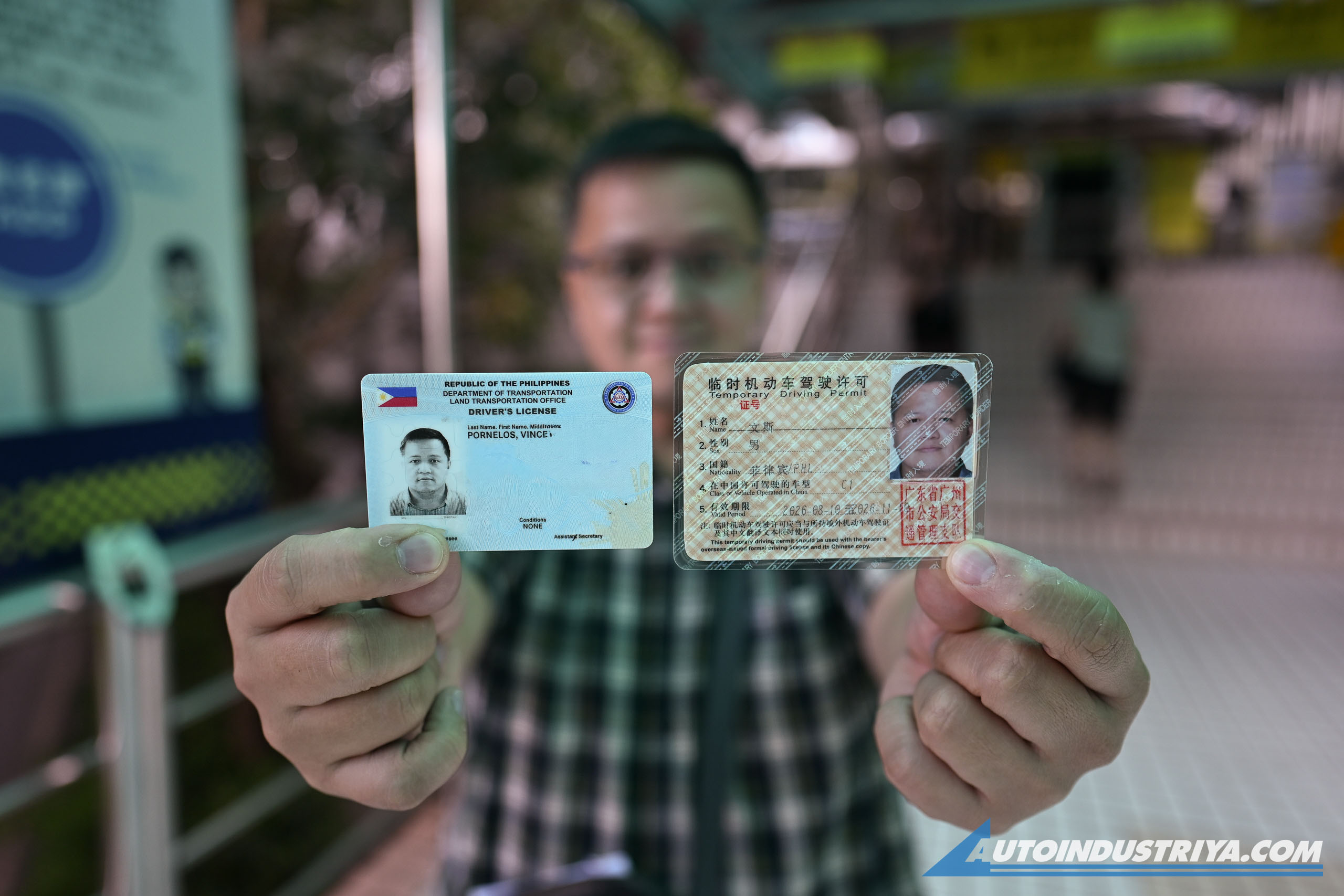
So, if you want to drive in the PRC and explore the vast country, you must get what is called a Temporary Driving Permit in the PRC. It is issued on a provisional basis for foreign drivers who want to borrow a car from a friend or want to rent a car in the area they want to drive around. It is valid for the period of your visa that was used to enter China.
Here is how, based on our recent experience with Xpeng in Guangzhou. The steps may vary, but we’re recounting how we went with the process.
-
Step 1. Get a Certified Translation
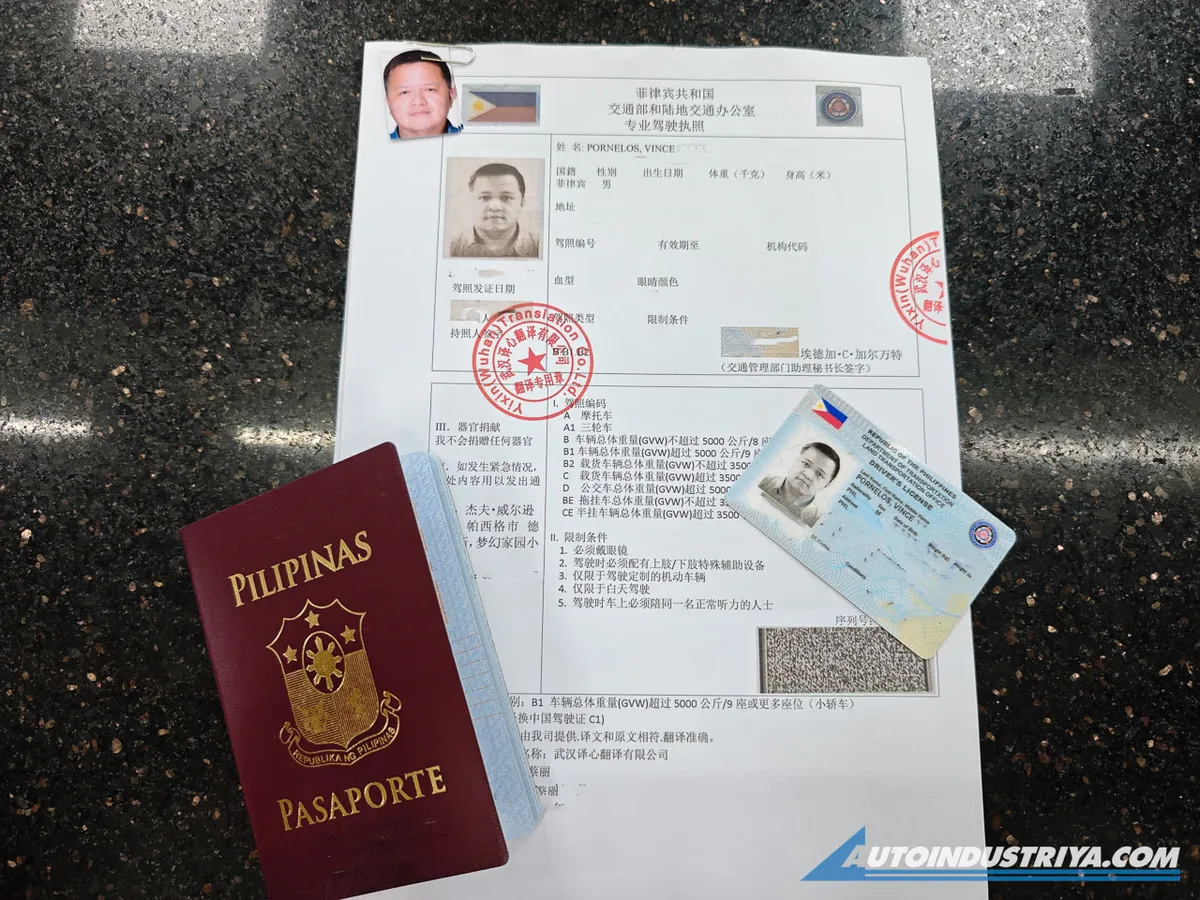
Before going to the Chinese equivalent of LTO (with the Traffic Police) for a Chinese license is to procure a translation of your license and your passport. This should be done by a company in China that is duly certified by the government (definitely not by Google Translate), and will have photocopies of the certification of the company and the certificate of the translator/interpreter.
Some recommend that you get a translation from a company that is local to the place where you’re going to get your license. In our case, it was not an issue given that the translation company was in Wuhan but we were applying in Guangzhou; it may vary.
In the end you’ll have about 5 photocopies in total: front/rear translation of your LTO license, front/rear photocopy of LTO license, translation and photocopy of PH passport info page, photocopy of translation firm certificate, and photocopy of the interpreter/translator’s certificate.
Step 2. Go to the Traffic Bureau
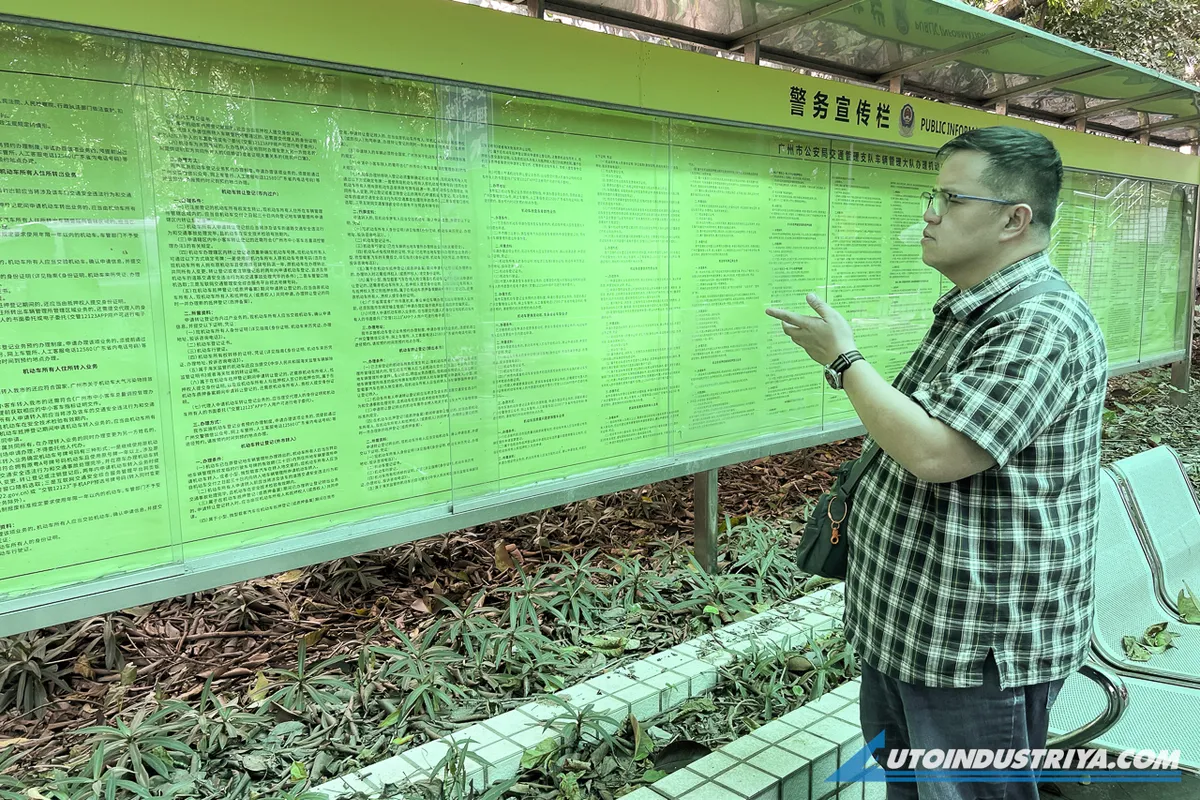
We were taken to the local equivalent of the LTO, which is the Traffic Police Detachment of the Guangzhou Public Security Bureau. This is where you apply for driver’s licenses in this city.
Also, keep in mind that it will be very useful to have an interpreter with you unless you speak Mandarin. Since we were in GZ, Cantonese would also be useful.
Make sure to bring your translated copies, your Philippine (or other non-Chinese) passport, driver’s license, and a few small ID photos (21mm x 26mm) with you to the traffic management agency in the region. If you don’t have a photo, there is a photobooth in the place where we applied for the license in Guangzhou.
2 photos
Step 3. Verification, Processing and Encoding
Once inside the Traffic Police building, you will queue for the verification process with any of the Traffic Police staff there. It has the feeling of a bank, but these are all law enforcement officers.
When it was my turn, the Policewoman checked my documents one by one, similar to what Immigration officers do. She verified (character by character) the information on the translation, the passport, and the driver’s license if they all matched up. Then she looked at my name and asked me to choose a shorter one. I just chose the Chinese characters representing my first name. And she pronounced it BIN-CHU.
Once she encoded all the data into their form, she printed out a QR code with the payment, and our host then and there scanned it into WeChat Pay, and promptly paid it. And that was it done right there. You can also use Alipay if you want. And it costs 10 RMB, or about PHP 98 (yes, less than PHP 100!).
Step 4. Is this a Test?
After payment online, we went up to the fourth floor of the building where we waited outside what looked like a classroom. There were about 50 or 60 foreigners and locals in there, all watching from one of two big-screen TVs and a projector on the whiteboard. But there were easily about 10 CCTV cameras in there.
We were asked to go in, and were told we would have to sit there and pay attention to a 30-minute instructional video. Or at least that’s what I thought it would be.
The video was not instructional; if anything, it looked like news footage about various road crashes, interspersed with different security camera angles and Chinese police talking about what’s happening. The problem is that it was in Chinese, and in our group only one spoke Mandarin. In other words, we couldn’t understand a thing.
What made the experience unique, however, is that the administrators of the test would actively monitor those of us who were supposed to be watching the video. The pan-tilt-zoom camera in the middle of the room would actively move around to check if everyone was paying attention, and the administrators would walk up to anyone who may be asleep or using their phone.
I think that’s the point of the exercise. It’s not so much the material on the video, but whether you as drivers will follow the most basic of instructions: can you fully focus on the task you were given and avoid falling asleep in the air-conditioned room and put away your phone? If that really was the point of the video, then I think what they’re doing is brilliant.
Step 5. Pick up your Card
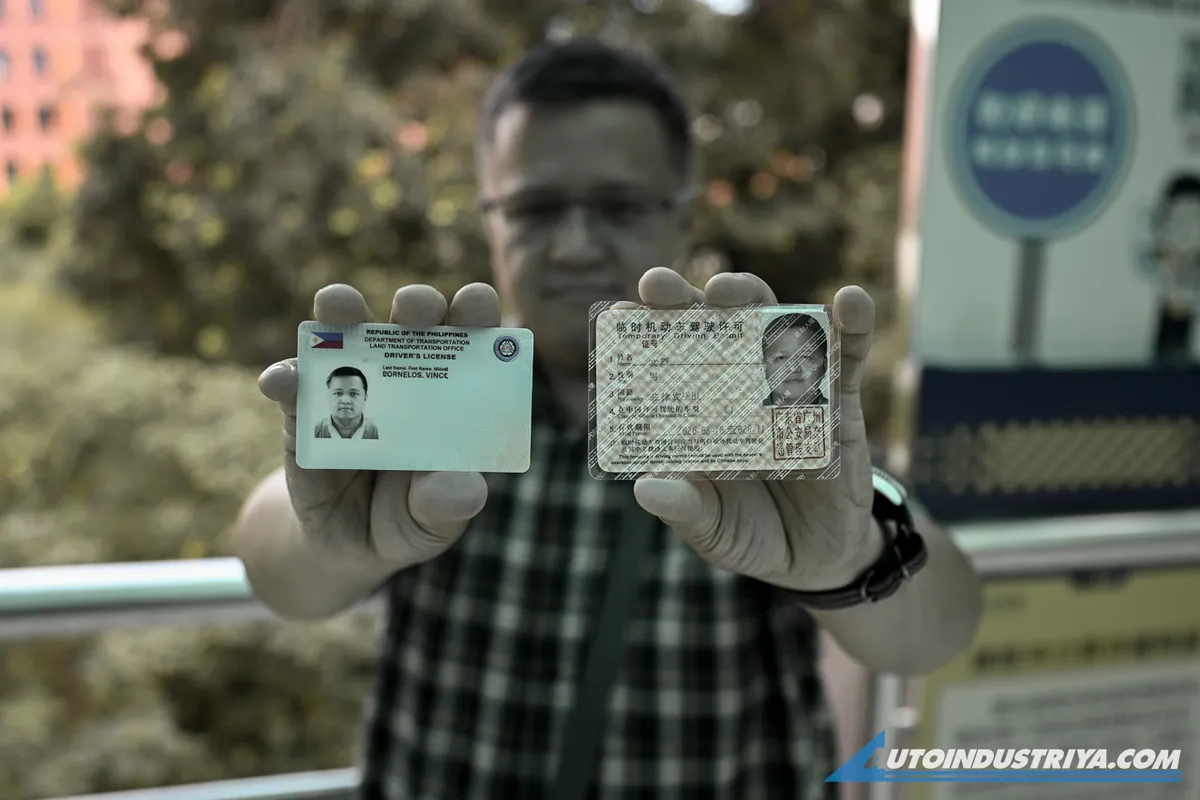
At exactly 30 minutes, we were told time was up. We were instructed to go back to the main floor, and there we picked up our driver’s license; or rather, our Temporary Driving Permits.
This card can be used throughout China, but must be carried with your foreign license, passport, and translations. All of those items must be present on your person when you’re driving.
And that’s it. The whole process for us took about 2.5 hours. Nolan’s Odyssey took longer than that, and it cost less than PHP 100, which is about a tiny fraction of the fee the AAP charges when you get an IDP.
Related Posts

Philippine Red Cross receives Isuzu water truck from Ayala
Philippine Red Cross boosts disaster preparedness and humanitarian response with new Isuzu water truck
 AutoIndustriya.com
Toyota PH, AAP launch free 24/7 roadside assistance for eligible customers
New Toyota Tamaraw and Lite Ace owners beginning August 2026 are eligible for the new 24/7 roadside assistance
AutoIndustriya.com
2026 Makabayan Endurance Race Challenge Series Round 1 postponed
Makabayan Endurance Race Challenge Series organizers postpone 2026 4 Hour Kagitingan Cup to a later date
 Jamil Lacuna
2026 Toyota GR Philippine Cup season put on hold due to fuel crisis
Toyota Motor Philippines announces TGR Philippine Cup events on hold until further notice
Jamil Lacuna
Fuel Crisis: AAP-sanctioned motorsport events in PH temporarily suspended
Motorsport events in PH sanctioned by AAP suspended after BBM declares state of national energy emergency
Jamil Lacuna
Driver of "plateswap" Porsche 918 gets license revoked
The businessman who swapped the plates of a Porsche 918 gets his license revoked by the LTO; BOC also says the vehicle has discrepancies in its import docs
 Brando Rosales