
Isuzu and Toyota fuel cell route bus launched with 300 km range
Isuzu and Toyota fuel cell route bus launched with 300 km range
Isuzu, Toyota launch jointly developed fuel cell route bus

Last year, Isuzu and Toyota announced they were jointly developing a hydrogen fuel cell bus. 12 months later, the two Japanese manufacturers’ love child is born.
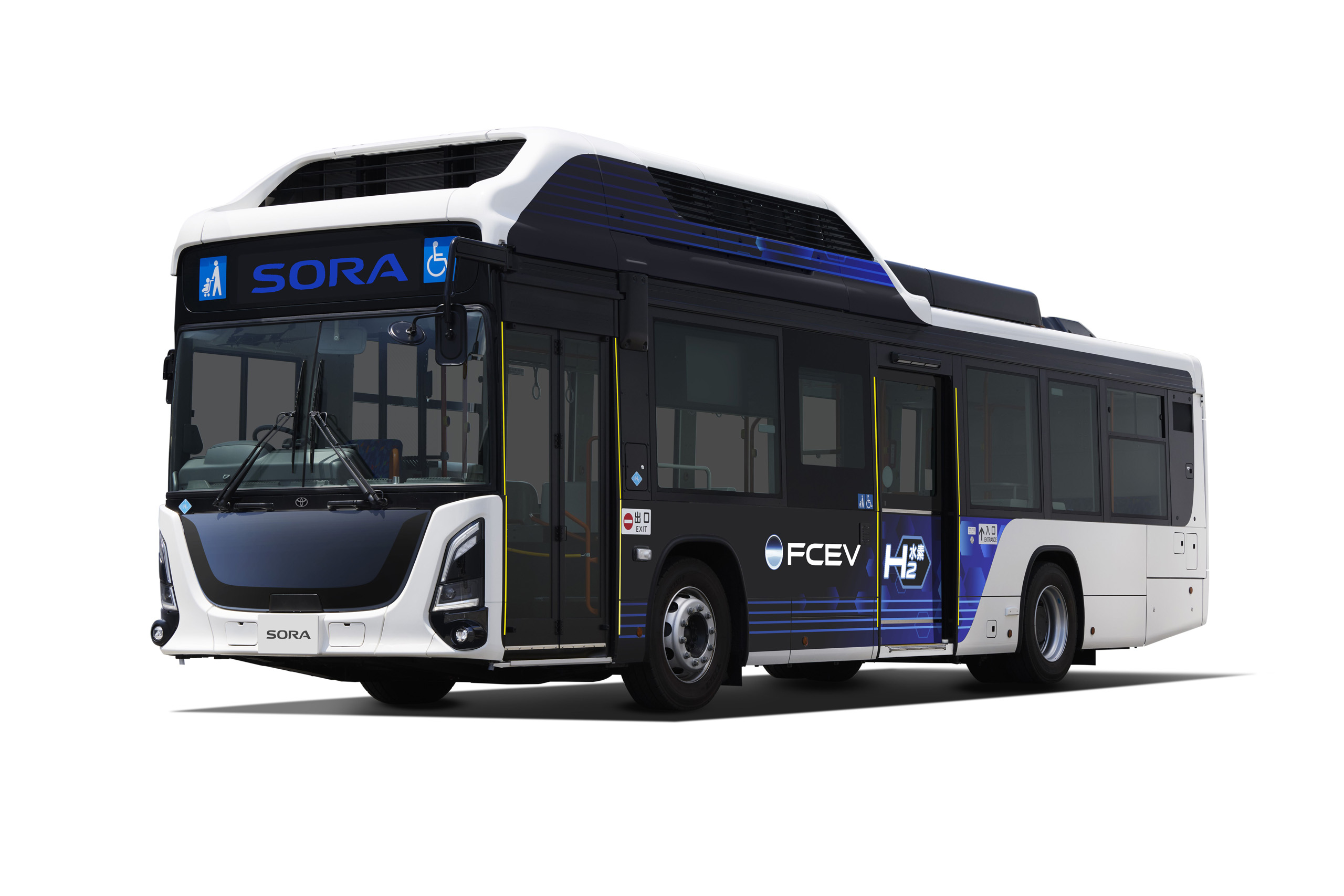
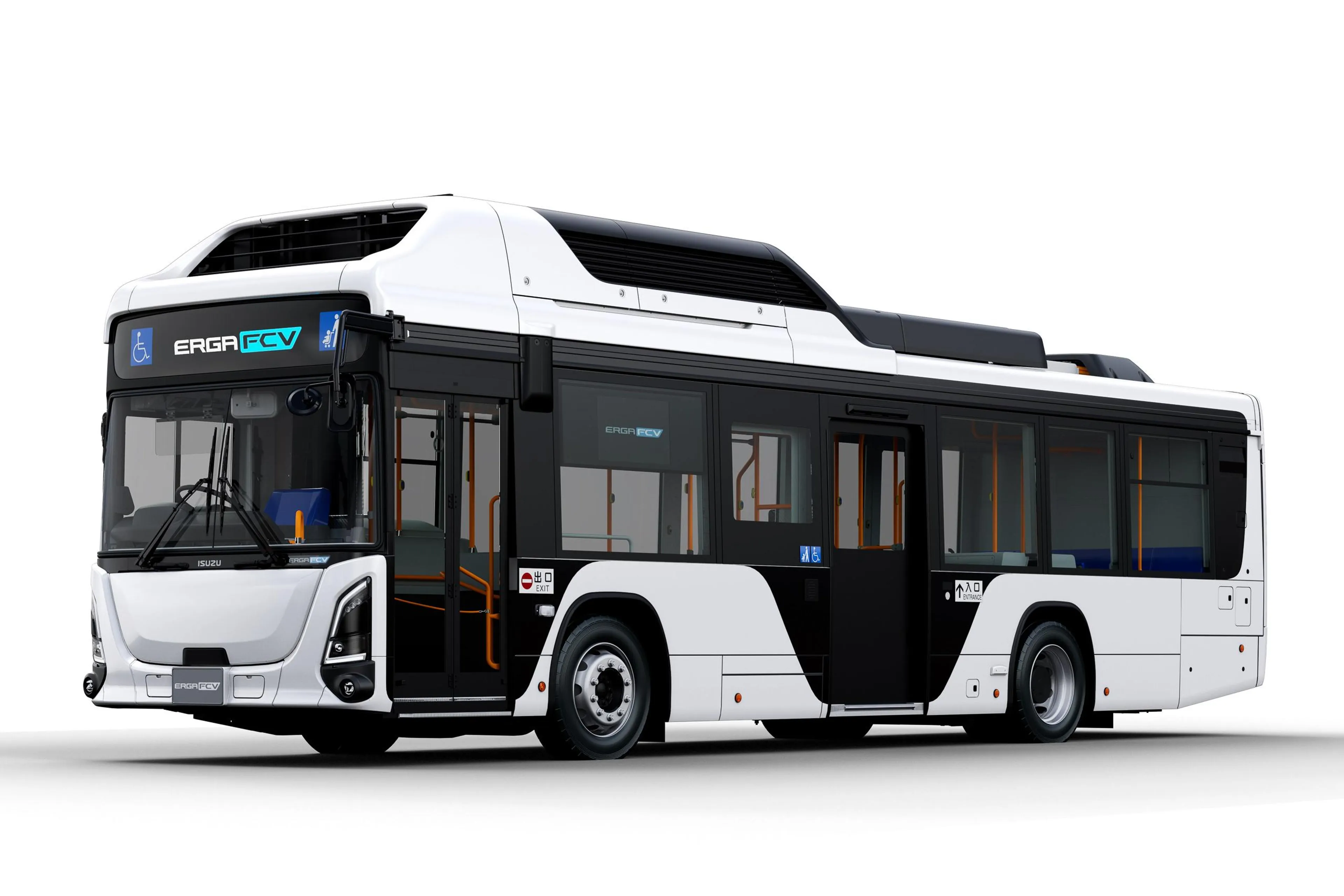
Making its debut is the production version of the Isuzu Erga FCEV, also known as the next-generation Toyota Sora, which aims to meet the zero-emission energy policies of national and local governments as well as the needs of bus operators, while contributing to the decarbonization of public transportation.
As announced previously, the Erga / Sora fuel cell route bus uses Isuzu's BEV full-flat route bus platform combined with Toyota's fuel cell system. The entire FC system is compactly mounted on the roof, with a smaller FC stack and a newly developed large hydrogen tank that’s specially made for commercial vehicles.
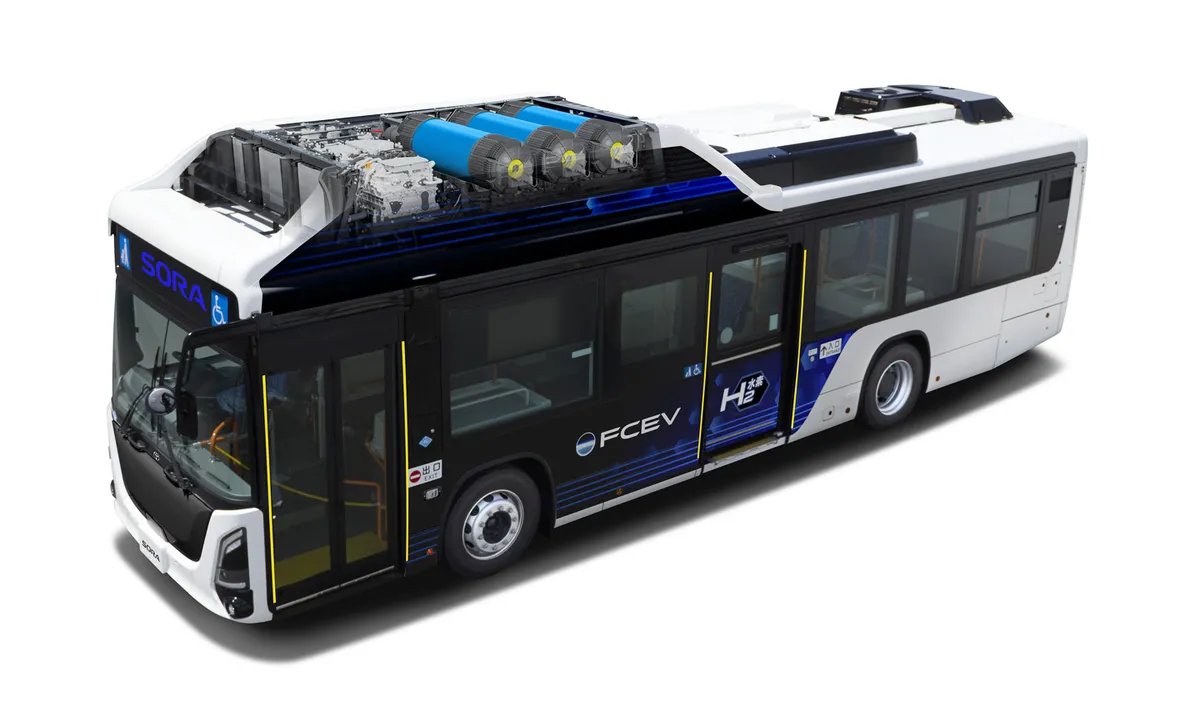
The Erga / Sora FCV generates electricity through a chemical reaction between hydrogen stored in its tanks and oxygen from the air in the FC stack. The electricity generated powers the vehicle’s motor, which generates a combined 299 PS and 970 Nm of torque. The FC stack, on the other hand, delivers a maximum output of 113 kW (154 PS).
The three 157-liter high-pressure hydrogen tanks enable hydrogen refueling in approximately 10 minutes and give a range of over 300 km, which meets the operational requirements of transit buses in Japan. Likewise, the fuel cell bus can also be used as an emergency power source during disasters.
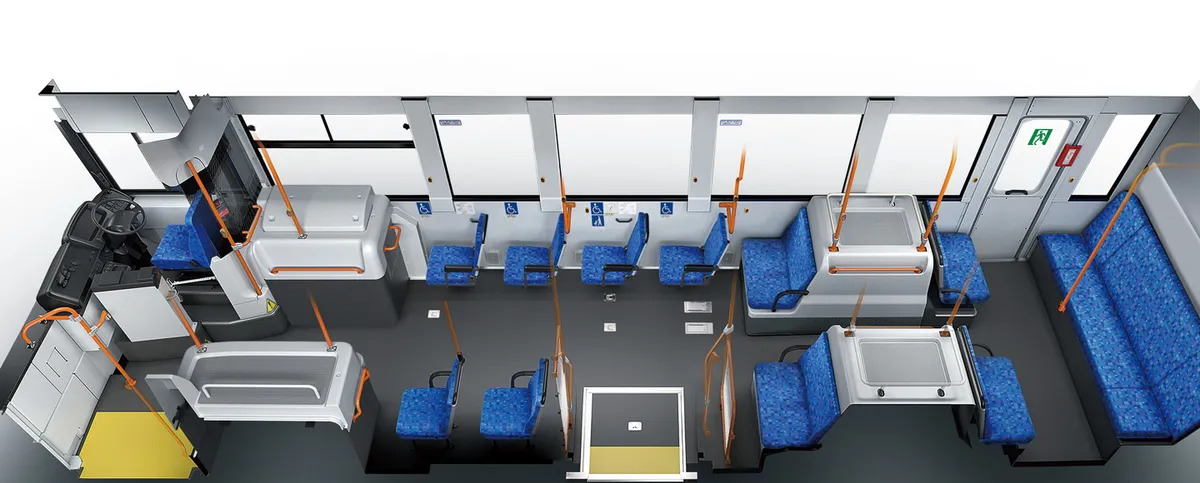
With the FC system mounted on top, the passenger area features a full-flat floor with no steps, making it easier for all passengers, including those with wheelchairs or strollers, to move safely and smoothly. An optional one-touch wheelchair securement system is available to assist wheelchair users in getting on and off the vehicle and helps the driver secure them smoothly.
For safety, the Erga / Sora FCV has a front blind spot monitor, as well as an emergency driving stop system that works with a driver status monitor. This detects if the driver becomes unresponsive and automatically slows the bus to bring it to a stop.
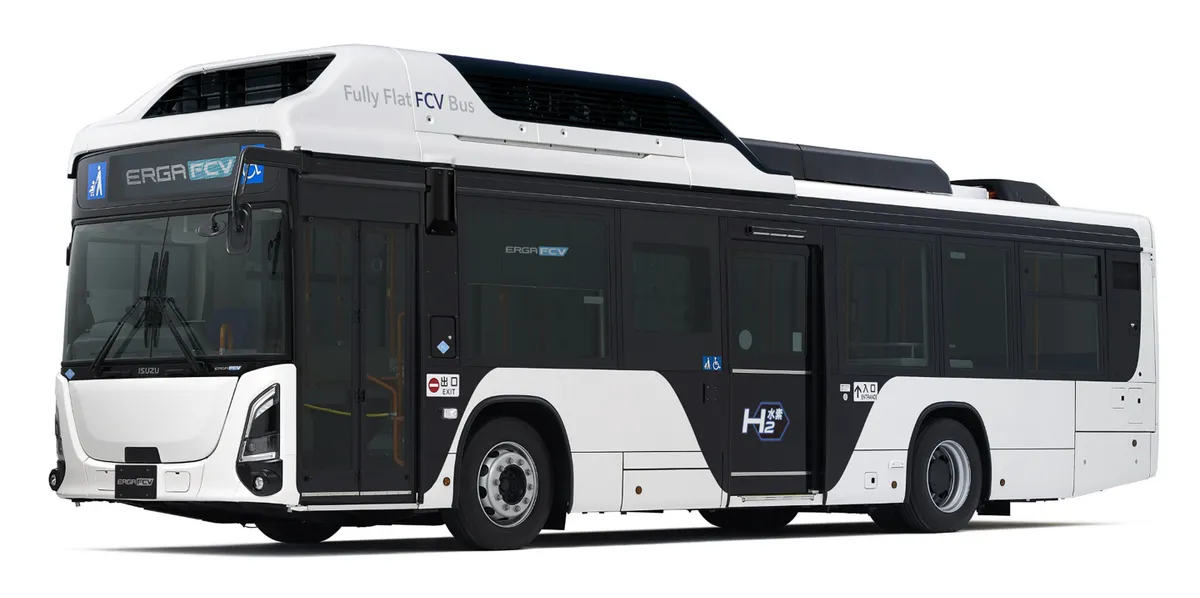
Japanese market orders are set to begin around April 2027, with Toyota and Isuzu offering four body types, including urban and suburban variants with different seating arrangements.
Related Posts
Isuzu Erga FCV: Fuel-cell powered bus made possible with Toyota
The Erga FCV can recharge faster while still producing no harmful emissions besides water vapor
 Marcus De Guzman
Isuzu, Toyota to roll out jointly developed hydrogen fuel cell bus in 2026
Isuzu and Toyota announce joint development of next-generation fuel cell route buses
 Jamil Lacuna
Isuzu Elf with Toyota hydrogen fuel cell tech set for 2027 launch
Isuzu, Toyota agree to jointly develop first mass-produced fuel cell light duty truck in Japan
Jamil Lacuna
Isuzu PH turns over new heavy-duty tractor heads to Menorian Movers Inc.
Isuzu's heavy-duty tractor heads empowers Menorian Movers' fleet of trucks
 AutoIndustriya.com
Isuzu CDO supports business growth in Mindanao at Trucxpo 2026
Isuzu NMADI Trucxpo 2026 gathers fleet operators, cooperatives, NGOs, and industry stakeholders
AutoIndustriya.com
Isuzu N-Series EV gets DOE nod; launching in PH soon?
Based on the initial specs, the Isuzu N-Series EV could get up to 299 km of range
Marcus De Guzman