
More incentives, more problems? Senate bill filed to broaden EV perks
More incentives, more problems? Senate bill filed to broaden EV perks
New Senate bill filed to extend, expand EV incentive in PH

2026 is such an attractive time to switch to an electrified vehicle.
You have plenty of all-new models to choose from. The current government policies are in favor of new energy vehicles. Currently, DOE-recognized HEVs, PHEVs, and EVs enjoy major incentives such as import tax breaks until 2028, LTO registration discounts, and, for owners, the exemption from number coding until 2030.
Combine that with the current fuel crisis of 2026, and you pretty much get the picture – the NEV market is thriving.
Yet, the country’s lawmakers are already thinking of ways to sustain the momentum through the 2030s. Senate President Win Gatchalian has filed a bill seeking to accelerate the country’s transition to electric vehicles (EVs) further, by adding more incentives that the Senator hopes would help reduce the country’s dependence on oil imports.
Sen. Gatchalian has filed Senate Bill No. 2270, which seeks to amend Republic Act No. 11697, or the Electric Vehicle Industry Development Act (EVIDA), which was also mainly authored by the Senate president himself.
Among the contents of the bill are the extension of the validity of fiscal and non-fiscal incentives on the EVIDA law from 8 to 12 years, which include the zero percent import duty on electric vehicles, as well as related equipment and infrastructure, to be extended until 2034.
This should be able to help keep EV prices competitive in the country in the coming years and entice buyers to switch from pure combustion to electric. However, the press release only states electric vehicles, and might not cover other new energy vehicles such as PHEVs and HEVs. The entire copy of the bill is yet to be accessible on the Senate website, but once we get a hold of a copy, it should provide a clearer picture of what the amendment covers.
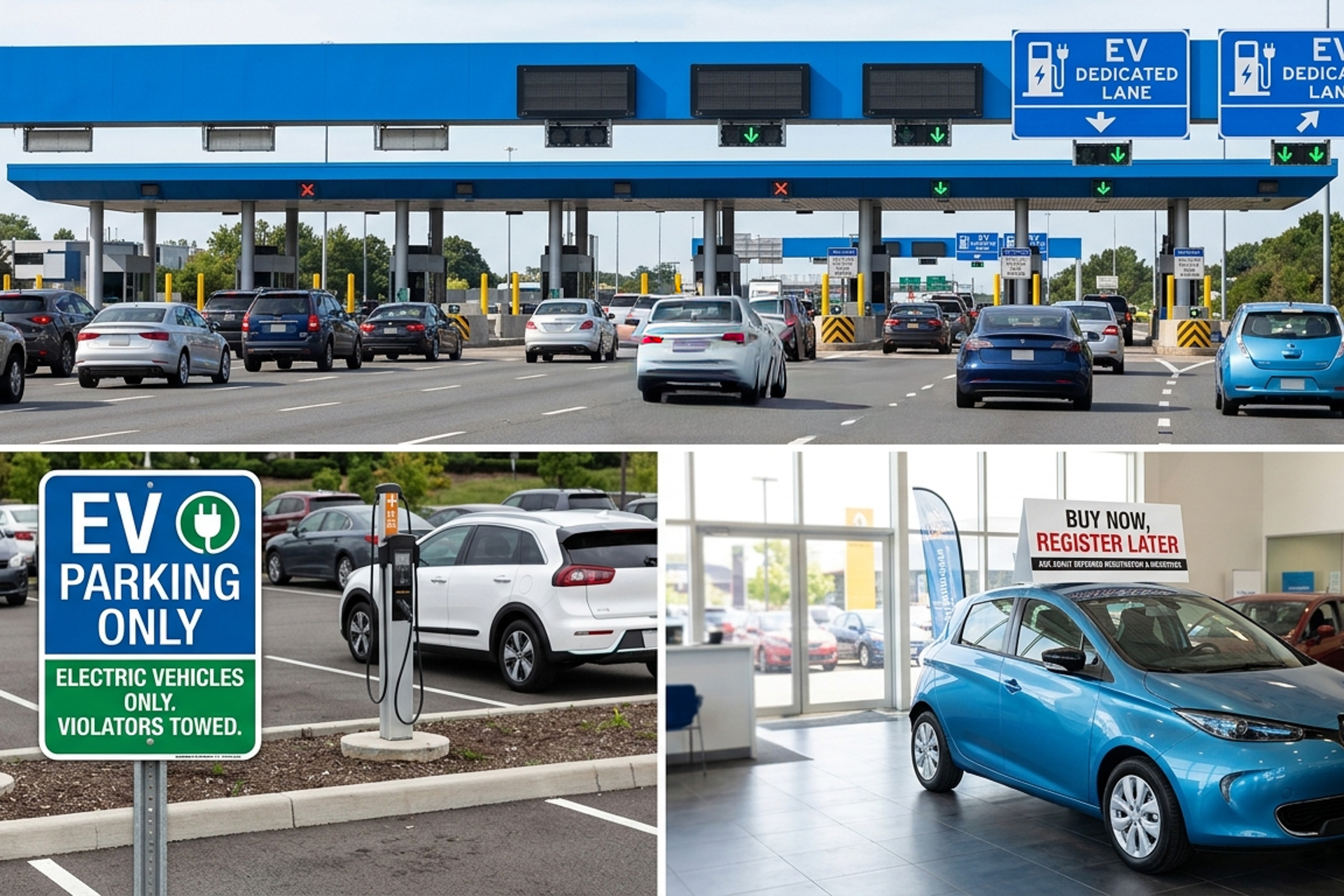
Furthermore, the bill seeks to increase the minimum allocation of exclusive EV parking slots of establishments to 20% of total parking spaces, with a 5% increase every five years.
The other additional non-fiscal incentives for EV users under the new Senate bill, however, seem to be leaving us with more questions than answers.
The new Senate bill proposes waived or discounted parking fees for EVs, toll-free access to dedicated EV expressway lanes, and, of all things, a Buy Now, Register Later program.
While the first two additional incentives would indeed have a direct benefit for owners of electric vehicles, more research should have been done on how that would affect the businesses of expressway operators, owners of private establishments, and non-EV users.
The more likely scenario here is that the losses of revenue in imposing those incentives would be shouldered by non-EV users, by way of toll fee and parking fee increases. EV users benefit, but likely at the expense of non-EV owners.
Lastly, the Buy Now, Register Later program seems to be nothing more than just delaying the inevitable rather than being directly beneficial to a new EV owner. Buyers will still have to pay for the LTO registration fees after a certain number of days, weeks, or months.
If anything, it could be another potential source of issue as well that the Land Transportation Office (LTO) will have to deal with, apart from keeping the supply of plates and license cards sufficient. With the “no plate, no travel” policy in place, implementing the Buy Now, Register Later would seem to counteract that completely.
Should they push through with this so-called incentive, perhaps the Highway Patrol Group should be included in the group chat for proper guidance. We’ve seen it all happen before, where innocent motorists are apprehended for no reason, and this case is more than likely to be history repeating itself.
And lastly, the incentives seem to be centered around making private entities invest more, and less about the government doing its part and making people’s taxes work. So that leaves the question – does the Philippines really need more EV incentives?
If the goal is to really accelerate EV adoption, the government doesn’t need to look far and overthink it too much – it’s the infrastructure that needs to be worked on. Private companies are already doing their part of the heavy lifting, despite obvious permit delays caused by red tape holding them down – it’s time the government does theirs. And no, we’re not talking about putting up new facilities – they should utilize what’s already in abundance, and existing all over the country.
They can start off by installing sufficient EV chargers in government-owned centers such as the Senate building, provincial capitols, city halls, and municipal offices. Yes, it might not apply to every location in the country, especially in the Metro.
But you see, it’s the infrastructure in the provinces that needs to be developed more – in this case, the wider spaces in the provinces could be utilized to accommodate EV charging stations.
If they can’t provide charging for free, then perhaps a rate lower than home charging should be more than enough to give benefits to everyone and entice EV ownership, without affecting those who don’t have the means to switch to electric just yet.
In our search for distant answers, we often overlook the obvious solution staring us in the face.
Related Posts

Senate approves bill allowing PBBM to cut fuel excise tax
Senate Bill No. 1982 gets immediate approval to let PBBM reduce or suspend the fuel excise tax
 Marcus De Guzman
PBBM certifies as urgent a bill to ease limits on importation of biofuels
More imported biofuels to help with high fuel prices
 Brando Rosales
DOF, DTI claims foreign manufacturer looking to build EVs in PH
DOF and DTI executives claim that a foreign EV brand is exploring a strategic investment in PH
 Jamil Lacuna
EVIDA author: HPG has no authority to inspect EVs under law
No provision in EVIDA Law about certification from DOE
Brando Rosales
Is the PNP-HPG chief unaware of DOE certified hybrid, EV list?
PNP-HPG chief wants roadside inspection and verification of coding exempt EVs, HEVs, and PHEVs
Marcus De Guzman
Wow Mali: MMDA reverses NCAP number coding violation of EV driver
The MMDA maintains that it was an "isolated case"
 AutoIndustriya.com